
Happy Anniversary
Celebrating numerous neurological research advancements and ten years seizure-free

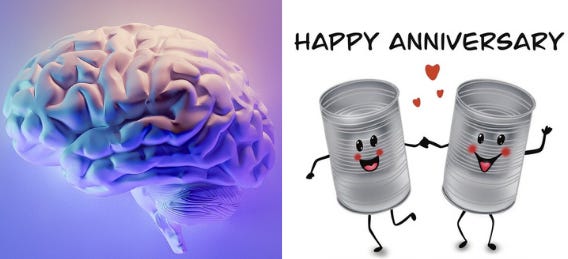
December 4th marks my ten-year milestone of seizure-freedom. The date is embedded in my dominantly left brain, good for memorizing dates. The date is also written on the Department of Motor Vehicles (DMV) form my doctor completed in 2016, which documented my most recent seizure. The form was required when I applied for a driving permit. Prior to my 2014 double brain surgeries, I had uncontrollable seizures for over forty years. So, while a decade seizure-free is worth celebrating, when it comes to epilepsy there are no cures or guarantees. “Approximately 30% of brain surgery patients have seizures post-surgery,” the neurosurgeon told me after the first elective surgery.
I was in that 30%, as a subdural hematoma developed post-surgery, triggering multiple tonic clonic (aka grand mal) seizures. Removing the hematoma required an emergency craniotomy on June 28, 2014, an invasive procedure that took over a year to fully recover from. My last seizure was almost six months later, when I tried tapering off Vimpat, one of my two anti-seizure medications. A week after I stopped taking Vimpat I had a tonic clonic seizure that landed me in the E.R. I got back on Vimpat that day and I’ve been seizure-free since then.
In some western cultures, ten years of marriage is traditionally referred to as the “tin” anniversary. Tin represents the strength and adaptability required to keep a marriage strong. This week I’m celebrating the tin anniversary of my altered brain, strong enough to ultimately heal from two brain surgeries, and resilient enough to adjust to my brain’s reconfiguration and remain seizure-free, a difficult journey I describe in my book, Seizing Control. There’s a lot to rejoice about.
In March 2017, after months of driving lessons and multiple DMV tests, I got my first driver’s license at age 50. I’ve lived in a major city my entire adulthood, so pre-surgery, I was adept at getting around without a car. Even so, getting a driver’s license was a game changer, especially since I was a parent. At the time, my eight- and ten-year-old children still needed rides to and from their extracurricular activities and now I could provide them. If I wanted to visit a family member in an outlying suburb, I could get there on my own. The newfound independence was dizzyingly liberating. I always keep that DMV form in my bag. In the unlikely petrifying event that I have a seizure while driving, that form absolves me of legal liability or wrongdoing. If I dwelled on the absence of a seizure-freedom guarantee, I would never drive. Instead, I focus on this: Seizures beget seizures. Conversely, the longer a person is seizure-free, the more likely it is that they won’t have another seizure. Ten years and counting is a solid comforting record.
Perhaps the biggest joy is that I no longer start every day uncertain about whether I might have a seizure. I didn’t actively ponder about this too much prior to full seizure-control. But the possibility that those misfiring neurons might overtake my brain, leaving me unaware and out of control of my body loomed in the background, an invisible perpetual weight I endured prior to 2015. Believing that the weight was gone took a few months. Initially, I didn’t quite trust seizure-freedom was permanent. But once I accepted it as my new reality, relief washed over me in soothing, warm waves. I sang out loud as I strolled the streets, embarrassing my then seven-year-old daughter. I didn’t care—my elation wouldn’t be tamped down by her mortification.
There is also much to celebrate during the past ten years of neurological research and development. Several new anti-seizure medications have been approved, including some with higher tolerability rates than the older ones I grew up taking. For those like me with drug-resistant epilepsy, there have been advancements in pre-surgery testing devices, which make more precise less invasive brain surgeries possible. Since my 2014 surgeries, less invasive surgically implanted responsive neurostimulation (aka RNS) therapy has become more commonplace.
Last week I read about Mayo Clinic researchers who are developing a new personalized approach to deep brain stimulation, or DBS, for people with drug-resistant epilepsy. Deep Brain Stimulation is far less invasive and risky than brain surgery. Neurologists map out each patient’s unique brain wave patterns, which enables them to target the precise area in the brain where stimulation is most effective. Although this technique is only in the initial research phase, the move away from a traditional one-size-fits-all approach is exciting.
This December 4th, I’ll observe my seizure-free tin anniversary by applauding all of this: The invisible weight lifted from my shoulders, the ninth year of my first driver’s license, and the progressing landscape of neurological innovations, anti-seizure medications, and neurosurgical techniques. While there may not be a cure for epilepsy yet, I’m grateful that the research and advancements continue.